
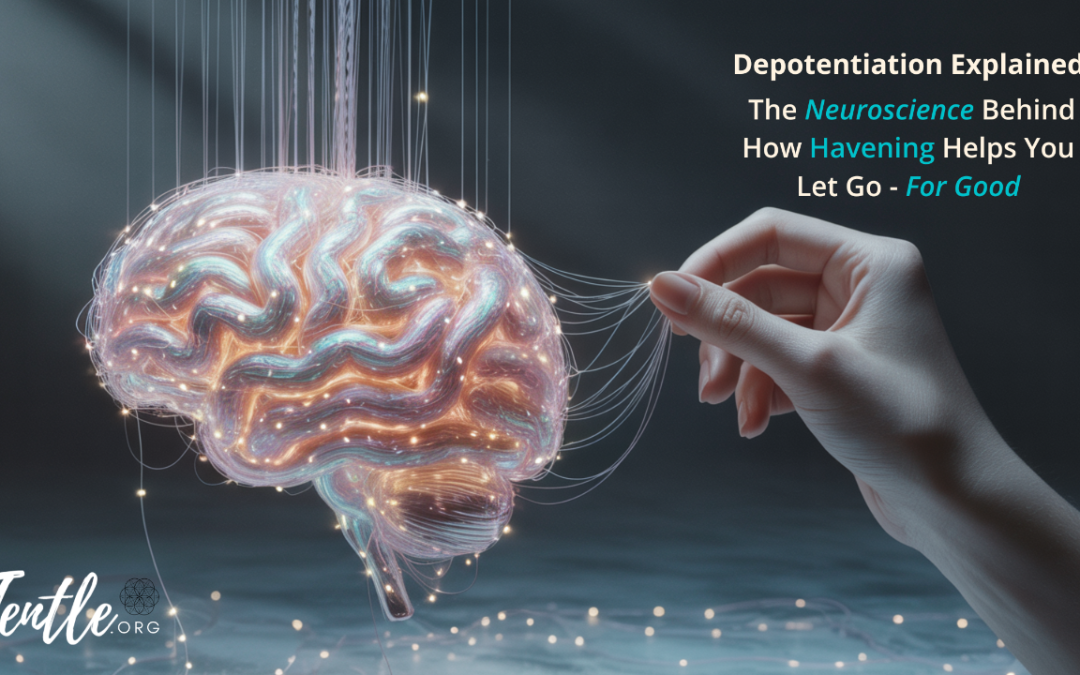
Ever wondered how a simple touch can ease years of emotional pain?
This isn’t just a poetic idea. There’s now clear, peer-reviewed neuroscience explaining how certain types of touch can deactivate traumatic patterns in the brain. Havening Techniques®, the psychosensory method I use and teach daily, is based on that science. In the next few minutes, you’ll see how it works, how it differs from traditional talk therapy, and what it might offer you.
Why This Matters
Trauma often lingers in the nervous system like hidden malware, quietly shaping thoughts, moods and even immune response. Havening uses a two-part process: recalling a distressing memory, paired with gentle, rhythmic touch. This combination produces slow “delta” brainwaves and releases calming neurochemicals like oxytocin and serotonin, sending a powerful safety signal to the brain’s survival system.
What happens next is known as depotentiation, a scientific term for when a traumatic neural pathway loses its charge and influence.
What Is Depotentiation?
Put simply, depotentiation removes the emotional voltage from a painful memory. Imagine an old lamp: unplug it, and the lamp remains, but no longer fills the room with harsh light.
In your brain, the “plug” is a group of receptor switches (AMPA receptors) inside the amygdala, the part that stores threat memories. When those switches are destabilised, the memory stays, but the panic, nausea or shame no longer accompanies it.
Four Elements That Lock Trauma In
Research has identified four conditions that must come together for an experience to register as trauma:
- The Event, something tangible happened.
- Emotional Meaning, we deeply cared about the outcome.
- A Sensitive Nervous System, stress, exhaustion, past adversity or hormonal shifts left the brain more reactive.
- Perceived Inescapability, we felt, in that moment, there was no way out.
Remove just one of these, and the same event might register as a bad day, not a lasting trauma.
Havening helps dismantle these elements.
What a Havening session feels like
Most people are surprised by how gentle it is. You bring something to mind briefly, without having to go over every detail. Then we use touch, the way we first learned we were safe and connected. The touch is the palms of your own hands, and I do it alongside you. It’s calm, often playful, and sometimes genuinely funny.
Havening has seven protocols, so there’s range and choice in how we work. As the session goes on, the charge around the memory tends to fade.
This process creates slow-wave activity and a chemical shift that counters the sense of being trapped, which often accompanies trauma.
How the Brain Releases Trauma
Think of AMPA receptors as Velcro® dots linking the emotional part of a memory to its mental image. When delta waves and a sense of safety are present, enzymes called phosphatases move in and detach the receptors. They’re reabsorbed into the cell, a process known as receptor endocytosis. Once gone, the emotional jolt no longer fires.
As I often tell clients, “The memory’s still there, but it no longer hijacks your system.”
Why Havening Feels Different from Talk Therapy
Traditional therapy often works by helping the thinking brain reframe an experience. This can be helpful, but when the emotional brain is on high alert, reasoning alone rarely brings relief.
Havening works through the body and the emotional brain. For people who’ve spent years trying to reason their way out of panic or shame, this shift in approach often feels like a breakthrough.
You don’t need to relive the memory for months, just feel safe for a few minutes.
What Clients Often Say
- “I can still see the crash, but it feels like someone else’s memory.”
- “The tightness in my chest is just… gone.”
- “I keep waiting for the anxiety to come back, and it doesn’t.”
These aren’t just nice reactions, they describe the actual process of depotentiation. The file is still in the brain, but the emotional amplifier has been disconnected.
What This Could Mean for You
- Feel Safe Again, Your body stops reacting to harmless cues linked to past trauma.
- Build Calm into Your System, The effects of oxytocin and delta waves begin to shift your baseline state.
- Let Go of the Past, As brain chemistry settles, sleep can improve, self-criticism softens, and relationships become easier to navigate.
Havening offers a structured way to create that change.
Try It for Yourself
Want to experience this shift?
Book a free 20-minute call and we’ll plan your first session.
Still thinking it over? You can read my own story – from two years of house-bound anxiety to daily calm. If something in you whispered yes while reading this, take the next gentle step.
When safety meets science, change becomes possible.
If this sounds like you
Read more about how I work with this, or book a free 20-minute call.